Monday, September 10, 2012

Chancellor Eisen in Tablet Magazine: "Make Some Noise in Synagogue!" #amen

Make Some Noise in Synagogue

Prayer shouldn't be a spectator sport. So why do so many shuls insist that congregants sit in silence?


The CEO and managing director of the Brooklyn Philharmonic set off a storm of protest in the classical music world this spring when he suggested that concert halls could benefit from less audience decorum and more clapping, laughter, cheers, and other expressions of emotion. Don't sit still so much at the symphony, Richard Dare urged: Performances of classical music need to be livelier, less hushed, less boring, and audiences can do their part in making that happen.

The idea horrified some musicians and orchestra officials. If people can't "sit still and be quiet," said Robert Spano, the music director of the Atlanta Symphony Orchestra, "I don't think classical music is for them." Dare has clarified his position in subsequent articles, but has not backtracked. "I don't want bedlam to break out," he told reporter Daniel J. Wakin for a piece about the controversy published June 8 in the New York Times. "I'm keenly interested in not dismantling the experience we have now," he explained. But he does want to make that experience "relevant to more people."

I'm with him all the way. If you substitute "synagogue" for "concert hall" and "prayer services" for "orchestral performances," you realize that Dare's proposal is relevant—point after painful point—to the experience that many Jews have in all too many North American synagogues. Since several million Jews are about to spend a great deal of time in synagogue—the High Holidays are almost upon us, to be followed immediately by Sukkot, Shemini Atzeret, and Simchat Torah—I think there is good reason to ask whether something could or should be done to alter the atmosphere in a shul in the ways that Dare wants to change it at the concert hall. I vote yes for two principal reasons.

One: Jewish religious leaders desperately need to make the experience of communal prayer much more relevant to many more people. Attendance at services has been falling steadily for decades—outpacing, I'd venture, even the decline in orchestra subscriptions. On the other hand, many synagogues are quite successful. Livelier services have consistently led to higher attendance. New and better music has proven especially crucial to generating new excitement in many congregations. Participatory services are more popular than services in which the congregation sits quietly for the most part, watching the rabbi and hazzan perform the work of worship up on the bimah.

Two: Tefillah was never meant to be a spectator sport, and by nature is the very opposite of a passive activity drained of emotion. We are talking about the attempt to stand before God, after all, however one understands God. This has never been an easy thing to do—consult the writings of religious virtuosi throughout the centuries—and is certainly not a routine matter for modern Jews in the pews. Nor is it easy to stand before oneself. The verb "to pray" in Hebrew is reflexive. Prayer is about exposing and facing up to depths of self, asking difficult questions and trying to answer them, pondering the meaning of God's teachings for one's life. The process can be uplifting, upsetting, or both. The tefillot we utter are meant to move us. At times the movement within has a chance to find expression in movement of the body—we bow, dance, sway, or parade around the synagogue. At other times, we keep what is inside bottled up, not wanting to reveal the turmoil.

And sometimes, I fear, the prohibition against showing too much emotion in the synagogue—laughing aloud or crying out, moving our feet repeatedly, getting up and walking around—actually gets in the way of feeling the feelings that the prayers are designed to elicit and express. These include gratitude, anxiety, need, anger, longing, fulfillment, wonder, and love. The list is not exhaustive. But it suggests the terrain on which tefillah takes place—a terrain not well suited to strict decorum. There are occasions when the liturgy explicitly directs us to "sing a new song unto the Lord," literally and figuratively. When we say the psalms of praise called Hallel on new moons and festivals, we try to make joyful noise unto the Lord. I think our services would benefit from other expressions of emotion, communal as well as personal: cries of grief or despair, expressions of awe before the wonders of creation, hand-clapping with God's thunder. Silence is sometimes the best vehicle through which we summon courage to face up to life or to death, but not always. The point is to be fully present before ourselves, one another, and God. Noise can help.

It's telling, I think, that before reciting the so-called "silent" Amidah, we say, "Open my mouth, O Lord, and my lips will proclaim your praise." For Jews at prayer, "silence" means lips in motion, mouth open rather than closed. Let me be clear: Gossip and idle conversation during the Amidah are rightly frowned upon. They are a harmful distraction. It's difficult to concentrate on the work of encounter when the people in front of you are talking about their kids or the election. The same holds true when the rabbi is preaching, when the Torah is being chanted, or when the hazzan is trying to achieve and maintain a high level of intentionality (kavanah) while getting the notes right. But as you know, if you have experienced it, silent prayer is greatly assisted by murmurings of prayer all around you, by occasional outbursts of a word or phrase that strikes another person with special force as she or he prays, or by the humming of melodies that go along with particular passages in the liturgy. Cries of children are often a welcome accompaniment to the sound of the shofar during the High Holidays. Shouts of joy or pain likewise add valued punctuation.

When Jews first entered the social, cultural, and political worlds of the modern West in the 19th century, we took pains to model our notions of what should happen in synagogue on the aesthetics of Protestant churches. Architecture, music, sermon styles, language of prayer, and—above all—decorum were transformed. Synagogues were no longer places for displays of emotion, any more than concert halls or museums. Movements of the spirit took place within the self, and were meant to remain there.

There is still a place for that aesthetic, I think. I would not want to lose the moments when the congregation follows along quietly as the Torah is chanted, or listens attentively to a sermon or teaching, or permits itself to be transported by the prayers of the hazzan. There are times to rise in unison and sit in unison, to take three steps back or forward in lockstep with those around you, to say the names of friends or family in need of healing before a silent congregation and gratefully answer questions afterward about their condition.

But, let's not lose the proper balance between quiet and noise, receptivity and participation. The rabbi will forgive you for talking to the person beside you if the point is to check in, offer support, get the news. The hazzan will not only forgive you, but thank you for singing or humming along, filling the sanctuary with the collective murmur of "davening" during silent prayer, or adding to the sense of life and movement in the synagogue. Kol Nidre's recital is not meant to be an operatic solo before a hushed multitude; the rhythm of Yom Kippur is marked as much by congregational chants and breast-beating (and tears) as it is by the progression from service to service, confessional to confessional. And if you are lucky enough to be part of a congregation that has come together at Kol Nidre, and has reflected and sung, sat and stood, fasted and swayed together all the way through to Ne'ilah, you can expect that communal recital of the final Avinu Malkeinu—when darkness falls, the "gates of repentance" close, and the end of the fast approaches—will be an experience of prayer that you will long remember.

I'd trade decorous silence for more noise in synagogue any day, and especially on the High Holidays. Let's put our hearts into our davening, and strengthen each other with our song.

***

Like this article? Sign up for our Daily Digest to get Tablet Magazine's new content in your inbox each morning.

Find this story online: http://www.tabletmag.com/jewish-life-and-religion/111260/make-some-noise-in-synagogue

------------------------------------------
Rabbi Menachem Creditor
To join Rabbi Creditor's email list, send a blank email to thetisch-subscribe@yahoogroups.com.

Tuesday, August 28, 2012

an interesting Forward piece by Debra Nussbaum Cohen: "Why Don't Girls Wear Kippahs At Camp Ramah?"

Why Don't Girls Wear Kippahs At Camp Ramah?
August 28, 2012, 6:00am, 
By Debra Nussbaum Cohen

THINKSTOCK

Eons ago, it seems, when Boychik was in elementary school and not the towering young man he is today, we went to a Camp Ramah parlor meeting to get a feel for the camp where we expected to send him for his first overnight summer experience. It seemed like an obvious fit. We belong to a Conservative shul and Boychik attended a Jewish day school. Since Ramah is the Conservative movement's network of camps, it would be a place where he could continue engaging with Jewish values and skills — while playing gaga.

After the camp's director gave his presentation, I asked if campers were expected to wear yarmulke, and for those over 13, tallit and tefillin. I was surprised when the director said that boys are. Full stop. No mention of girls. So I asked about girls. He deflected, and I asked again. Girls may wear the ritual items if they wish, he said, but they are not required to. When I asked why, he said because Conservative Judaism is a pluralistic movement and not everyone comes from an egalitarian home or synagogue. This was from the director of a camp not in the South or in Canada, where you might expect conservative attitudes from Conservative rabbis, but from the camp designated for New York City-area kids.

That early experience with Camp Ramah came to mind when reading this recent piece by Rabbi Elyssa Joy Auster, who discussed her surprise that the girls at a different Ramah camp were neither interested in wearing kippot nor expected to.

Little seems to have changed in the years since the Camp Ramah parlor meeting. There is much that Ramah camps do well, including teaching Hebrew and engendering a love for Israel. But modeling ideal religious behavior is also part of the job of the Conservative movement's camps — even if that means managing expectations of parents who might object to their daughters wearing kippah, tallit or tefillin.

Unfortunately, there is still a high degree of ambivalence in the Conservative movement about Jewish women's observance of these ritual customs. Rabbi Auster goes so far as to say that it reflects a lack of support for women as religious leaders and for developing female lay leadership. Perhaps that's true. I'm not sure, but I do know that when the ambivalence is transmitted from the top, it's not going to change.

The camp Ramah website says:

The current mission of Ramah is to create educating
communities in which people learn to live committed Jewish
lives, embodying the ideals of Conservative Judaism.

I would argue that both women and men wearing kippah, tallit and tefillin embodies the ideals of Conservative Judaism, of passion for observance and an understanding of our rituals. Are there challenges facing the movement's leaders at least as pressing as this one? Certainly — starting with articulating why someone should choose to be a Conservative Jew. But I see this as part and parcel of the overall challenge facing the movement, and the response ought to include articulating and modeling all of the reasons that it makes sense to identify as Conservative Jews, living wholly as Jews and wholly in the modern world. Teaching attachment to the ritual objects that are part of living embodied Jewish lives is part of that process.


Read more: http://blogs.forward.com/sisterhood-blog/161520/why-dont-girls-wear-kippahs-at-camp-ramah/#ixzz24rhobSLM
 

------------------------------------------
Rabbi Menachem Creditor
To join Rabbi Creditor's email list, send a blank email to thetisch-subscribe@yahoogroups.com.

Sunday, August 26, 2012

Koach college student survey


Koach college student survey

by Dan Ab -  Sunday, August 26th, 2012

Koach is the Conservative movement's organization for the benefit of college students. Since I was critical of some of their recent challenges I wanted to also note something positive. In advance of their next planning meeting (in about 1.5 weeks), they are doing a survey of college students and recent (in the last year) graduates. If you fit this description and have opinions about how a national organization can contribute to egalitarian Jewish observance on college campuses, please take their survey as soon as possible: savekoach.org/survey

If you're not part of the target population for the survey, but you've got opinions, why not share them in the comments below? Some of their leaders read comments posted here.

Here are my opinions:
The survey includes a draft vision/mission. Both are focused on "supporting educational & experimental programmings on campuses." This treats Jewish practice like another course, as though college students are all still learning what it means to be Jewish. At the core, this ignores college students as practicing adult Jews. The Conservative movement has opinions on what it means to be an observant Jew, so I'd expect a college organization to support that goal.

Given Koach's limited resources, what would this mean? It means connecting students to resources for observance on or near their campuses. Keep track of where students who are Ramah/USY alums or whose family went to a Conservative synagogue go to college. Make sure these students know what resources exist in their college communities, whether these are Hillels, local synagogues, and local independent minyanim. Even in small towns, you don't need a Chabad house or even locally paid staff to have local families host students for Shabbat dinners. If Koach can identify campuses with small Jewish populations, but students who might still want a Jewish community, those are targets for more active engagement, whether directly from Koach or by bringing them to the attention of other organizations. Particularly for campuses with few Jewish students, the Koach conventions and Koach-led networking between campuses can be good resources for observant students.

I also think a web presence focused on news and opinion is not the best use of resources. Anyone can post an opinion, but it takes resources to make a site have high enough quality to regularly attract college students. The website could be a place that contains resources on Conservative Jewish practice (perhaps in collaboration with the Rabbinical Assembly to make a resource that benefits more than just college students). The resources currently there seem to be only slightly beyond an introduction to Judaism class. If there's student-generated content on a website, it needs to live in this decade and let students regularly contribute. I'm not sure what this would look like, but forum that allow pseudonymity or anonymity where students can ask questions and get feedback regarding Jewish life on campuses or ask opinions from Conservative rabbis might be a good start. Simply including a way for a student enter their name so that someone can help connect them to families in the local Jewish community would be beneficial.

Overall, I'm glad to see someone in Koach is trying to get feedback from current students about the organization's purpose. Even if you don't have any positive connections to the Conservative movement, how could a hypothetical national organization with a $1 million dollar budget and a goal of supporting egalitarian and observant Jewish life on campus have benefited you?


On Thu, Aug 23, 2012 at 4:04 AM, <shefa@yahoogroups.com> wrote:
>
> ________________________________________________________________________
> Please forward to college students!
> Posted by: "Nina S. Kretzmer" ksnygirl@yahoo.com ksnygirl
> Date: Wed Aug 22, 2012 2:08 pm ((PDT))
>
> Dear hevreh,
>
> In two weeks, United Synagogue will be hosting a KOACH Summit to discuss what KOACH is and what it should be. I am involved in a group called Save KOACH which has been working around the clock to raise money and gather student input about a new foundation for Conservative college outreach. We need students to take the following survey as soon as possible: http://savekoach.org/survey
>
> Without their input, we cannot fully represent them. Please send this to the Jewish college students you know, even those from Class of 2012.
>
> Kol tuv,
> Nina S. Kretzmer

__._,_.___
Recent Activity:
Visit our home page at http://shefanetwork.blogspot.com/

*****************************************

"Shefa: The Conservative Movement Dreaming from Within" is a forum for
passionate Conservative Jews to reflect together as they increase creative
energy within within the culture and environment of the Conservative
Movement in an effort to bring a renewed and revitalized perspective to
Conservative Jews.

We belong to the Conservative Movement and commit ourselves to working
towards its revitalization. Be a part of this community of visionary
thinkers and builders. To join the conversation, email
shefa-subscribe@yahoogroups.com.

Visit our home page at http://shefanetwork.blogspot.com/
*****************************************
.

__,_._,___

Friday, August 24, 2012

Chancellor Eisen Rocks Aerobics, a 6'8" Bar Mitzvah Boy, and Happy 20th to Ramah Yachad-Ukraine!


NRC Website Banner
National Ramah Commission, Inc. of The Jewish Theological Seminary

August 24, 2012

6 Elul 5772

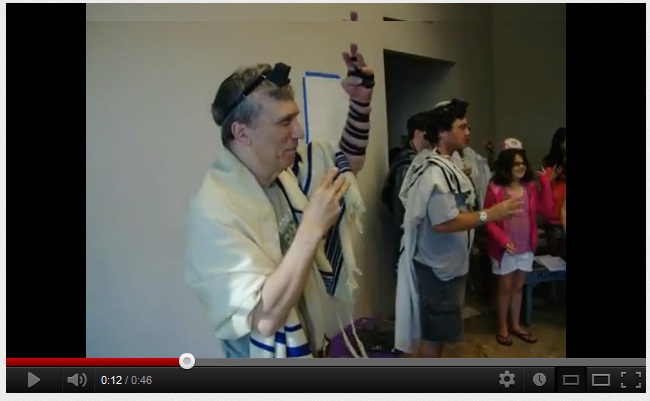
JTS Chancellor Eisen Rocks Tefillah Aerobics at Ramah!


"I continue to be amazed at the vibrancy of our Ramah camps."
                                                            - Chancellor Arnold Eisen, JTS

Tefillah AerobicsThis summer, Chancellor Arnold Eisen of the Jewish Theological Seminary visited Ramah Outdoor Adventure in the Rockies, Camp Ramah in the Berkshires, and Camp Ramah in New England. While at Ramah New England, he dived right into the Ramah experience as a baker at Cafe Ramah, but not before his early morning session of Tefilah Aerobics led by JTS and Ramah alumnus Rabbi Jeremy Ruberg. Watch the Chancellor (far left) dance with the 6th graders of Solelim.              read more...

About his visits, Chancellor Eisen reflected:

"I continue to be amazed at the vibrancy of our Ramah camps. Thousands of campers and staff living joyously in Jewish time and space is one of the most important experiences we can provide for Jewish strength and survival. My dialogues with teens were nothing less than inspiring. I believe that ongoing support of Ramah and close partnership with Ramah is fundamental to the mission of JTS, not in any way a peripheral concern. We must re-dedicate our movement's leadership to building serious Jewish commitment and qualified future leadership, and there is simply no better place than Ramah camps for this to take place." 

 6'8" Israeli Basketball Player

Becomes Bar Mitzvah 


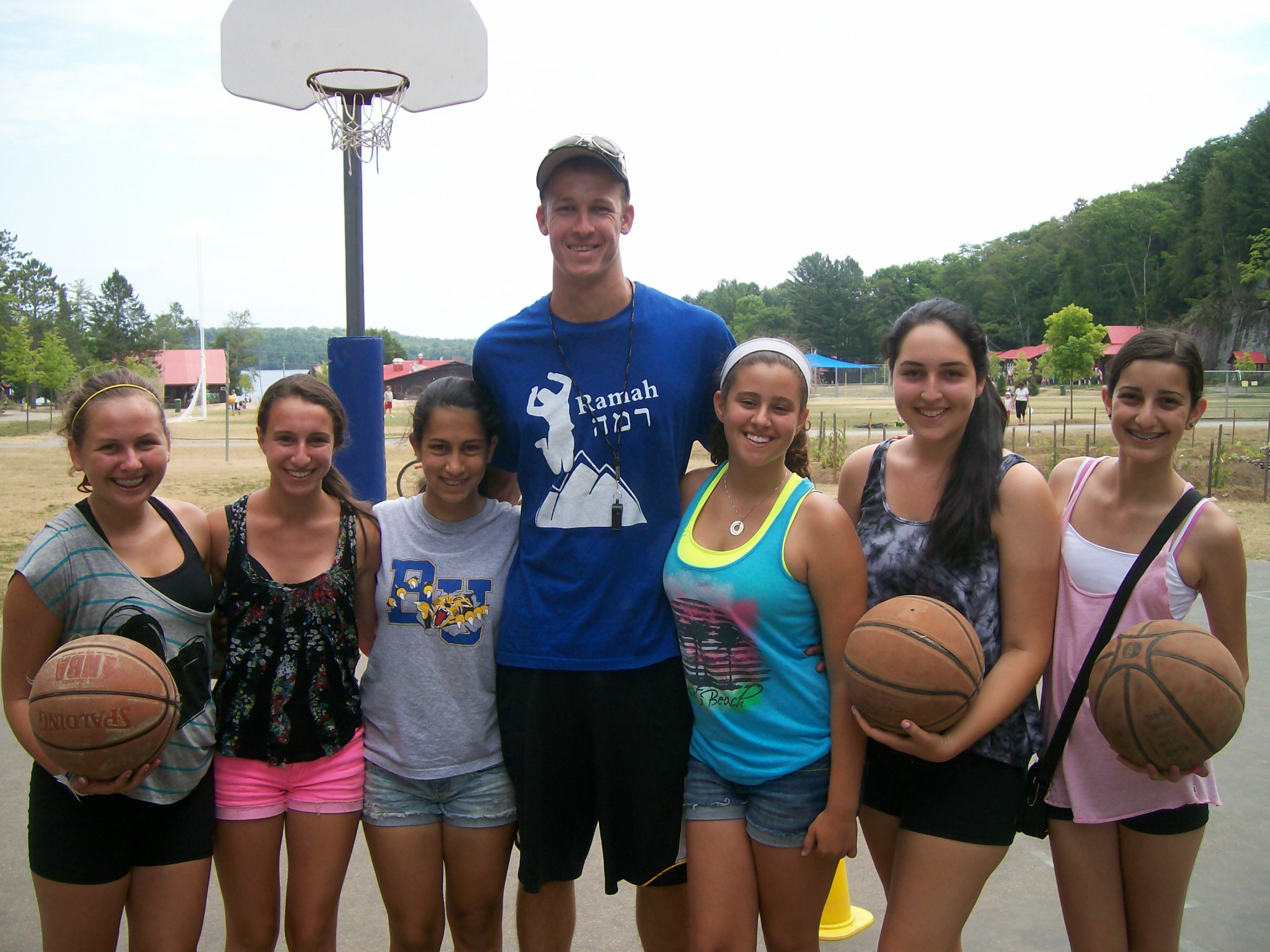
Although I love playing basketball with campers and staff when I visit Ramah camps, I was less than thrilled to be guarding Guy Levitsky, a 6'8" new Israeli sports counselor at Ramah Canada during June staff training week. Needless to say, he scored at will. Little did I realize ... read more

(Blog post from Rabbi Mitch Cohen,
National Ramah Director)
Guy Levitsky

 Register Today

for Two Amazing Israel Trips

Ramah Bike Ride
Join Ramah for five days of biking or five days of hiking through Southern Israel, plus Shabbat, all while raising money for Tikvah, Breira, and Yofi, Ramah's programs for children, teens, and young adults with special needs. Register today for the second Ramah Israel Bike Ride or Ramah Israel Hike Trip: Ramah Hikes the Negev. Registration is fully refundable through December 1, 2012.
 
Questions?

 Happy 20th Birthday,
Ramah Yachad-Ukraine!

Ramah Yachad-Ukraine
Twenty years ago, in a former Soviet Army officers' resort, Camp Ramah Yachad-Ukraine was born. ... Gila Katz, founding director of the camp, recalls, "When I was growing up in the Soviet Union, there were only Communist camps to attend. I so wanted to go, but my parents never allowed me. My dream was to attend a camp." That dream came true in 1992 when then director of Midreshet Yerushalayim, Rabbi Yossi Penini, asked Gila to run Camp Ramah Yachad in its first... read more

 Ramah Rabbis in the News

and in the Blogosphere


(Rabbi Eliezer Havivi, Ramah Darom)

Hava Nagila and Questions of Jewish Joy
(Rabbi Joel Seltzer, Ramah Poconos)
 
(Rabbi Gerald Skolnik, Ramah Berkshires)


Monday, August 20, 2012

JTA: "Takin’ it to the schools: Jewish Outreach efforts go public"

JTA: "Takin' it to the schools: Jewish Outreach efforts go public"

Members of the Jewish Student Union of Greater Atlanta, an organization for Jewish teens who attend public high schools, making dreidels for Chanukah.  (Courtesy National Conference of Synagogue Youth)

1 out of 3

Other Media

Members of the Jewish Student Union of Greater Atlanta, an organization for Jewish teens who attend public high schools, making dreidels for Chanukah. (Courtesy National Conference of Synagogue Youth)

EDUCATION

TEANECK, N.J. (JTA) -- When Rabbi Adam Raskin arrived at Congregation Har Shalom in Potomac, Md., last year, he was determined to reach out to teenagers uninvolved with the Conservative synagogue's youth activities. 

He approached the principal of Winston Churchill High School, also in Potomac, with a proposal to bring food to the school periodically, so he could schmooze with Jewish students during their lunch periods. 

"I decided that the best way to connect with them is to go to where they are," he said.

Raskin is not alone in that thinking. Jewish groups have long been reaching out to teens to fight post-b'nai mitzvah burnout. For several years now, some organizations have been taking Judaism directly to teens in their schools.

In 2002, a group of Persian Jewish students in a Los Angeles public high school decided that they wanted to do something Jewish and sent an e-mail to a yeshiva in Israel that eventually reached the Orthodox Union. That was the beginning of the Jewish Student Union, the OU's public school outreach program.

Now some 10,000 high school students, of various observance levels, at more than 250 JSU clubs across the country get together over kosher pizza during their lunch periods to talk about Israel, what happened in class that day or anything else on their minds. 

"It's the one place in schools Jewish kids can spend time with each other," said Rabbi Steven Burg, the international director of NCSY, the OU's group for teens. "The ultimate goal is to encourage the kids to do something Jewish. Wherever that journey takes them is up to them."

The United Synagogue for Conservative Judaism doesn't have a program similar to JSU, but the organization is looking toward "a whole new era of youth engagement," said Rabbi Steven Wernick, CEO of United Synagogue. 

"We're also looking, in a very broad sense, at how we can better connect with children and teens and how we can strengthen learning in Conservative synagogues – not just classroom learning but all sorts of learning, experiential and otherwise," he said.   

In Maryland, Winston Churchill High welcomed Raskin on the condition that he handle all of his own promotion. Shortly after the High Holidays, the rabbi began showing up in school with sandwiches from a local kosher deli, and some 30 students have joined him throughout the year. Some are members of the synagogue, some had gone to preschool there but haven't been back since and some are completely unaffiliated, but all are welcome, he said.

"He wants to get to know everybody and make us have a good time, both at the synagogue and away from the synagogue, with our Jewish identity," said Emily Dahl, 16, a rising junior. 

Jenna Cantor, an 18-year-old recent Churchill graduate, also praised the rabbi's efforts.

"Everybody enjoyed coming together with their fellow Jewish students during a different setting during a normal school day," she said. "It's nice to bond over religion at school."

Discussions have ranged from what it's like to be Jewish in the school to what happened in history class that day. The conversations are organic and student-led, Raskin said, and that's the way he wants it -- light and informal, allowing students freedom of expression.

"Some of the most interesting outcomes have been when everybody else leaves, some kids stay and talk about personal issues, share life stories," he said. "That's been tremendous. I don't know where we would have had that opportunity or they felt safe enough to have that sort of conversation."  

The program has become so popular that Har Shalom parents whose children attend other area high schools have begun asking the rabbi to replicate the program. Raskin also has had preliminary conversations with the students about formalizing the event into a Jewish student club.

However, the most important result, he said, is the positive connections that the lunches are creating for the students with each other, the rabbi and the synagogue.

"Not everybody will do that for high-schoolers," Dahl said. "We felt we were appreciated and he cared what we had to say." 

Until ending its national operations last year when it handed responsibilities to regional offices in San Francisco and Baltimore, The Curriculum Initiative had spearheaded Jewish programming on the national level for non-Jewish private schools for 15 years. Neely Snyder, director of teen engagement at The Louise D. and Morton J. Macks Center for Jewish Education in Baltimore, runs the Teens Can Identify program there in 14 private schools, reaching 1,500 students, of whom 850 are Jewish. 

"Many are looking to meet other Jewish students or reconnect with old friends," she said. "And others are primarily interested in exploring their Jewish identity as they are beginning to define for themselves who they are and how they relate to the world."

Some TCI programs in the past year have included challah and hamantaschen-baking, discussions on Gilad Shalit, the Israeli soldier who was held in captivity by Hamas for more than five years until his release last fall, and a week of events marking Sukkot -- all implemented in collaboration with Jewish student leaders, Snyder said. TCI programming not only has enhanced diversity in the schools, she added, but also has led to personal growth among students.

Snyder credits TCI's inclusion of Jewish and non-Jewish students as a reason behind its success.

"The Jewish cultural conversations and holiday celebrations held at these schools are open to everyone, and the Jewish students have demonstrated more interest in being present when their peers are there as well," she said. "This also expands the conversation to universal themes so that anyone, regardless of background, is comfortable and has something to contribute."

With TCI operating solely in private schools, issues that breach church-state separation are not brought up, but they do remain a concern for public school programs. 

In 1984, Congress adopted the Equal Access Act, which allowed public schools to make their facilities available to religious student-led and -run organizations. The Supreme Court upheld the act.

The Anti-Defamation League, however, finds the idea of any religious organization in public schools "disturbing," according to Steven Freeman, the organization's director of legal affairs. Despite the Supreme Court's approval, the ADL remains wary of blurring the line separating church and state.

"That line is a very slippery line," Freeman said. "Now it's a question of making sure there isn't proselytizing going on."  

The ADL's sentiment appears to be shared by the Union for Reform Judaism.

"We're very uncomfortable with the notion of religion in public spaces," said Rabbi Daniel Freelander, URJ's senior vice president. 

Some URJ congregations offer afterschool programming for students, he said, also noting that URJ has sent youth group advisers to some prep schools at the schools' invitation. Freelander praised efforts to reach out to unaffiliated Jewish students, "but it's unlikely you're going to see Reform programs moving into public school buildings," he said.

When initially creating the JSU model, the OU, too, was concerned about separation issues, but looked to the plethora of Christian clubs meeting in public schools as precedent, Burg said. All students, Jewish or not and of any observance level, are welcome in JSU clubs and no proselytizing takes place, he added.

"There's so much to be gained by going to them, especially when it comes to kids," Raskin said of outreach efforts. "It just demonstrates that they're an important population and we care about them."


------------------------------------------
Rabbi Menachem Creditor
To join Rabbi Creditor's email list, send a blank email to thetisch-subscribe@yahoogroups.com.

Wednesday, July 18, 2012

A Prayer in Response to the Terror Attack in Bulgaria


RA      

A Prayer in Response to the Terror Attack in Bulgaria

July 2012 - Tammuz 5772

Dear God,


It is just too much. On the eighteenth anniversary of the attack that killed eighty-seven of our brothers and sisters in Buenos Aires, we have lost more of our family, this time in Bulgaria. Again. It is just too much. 


So many people, on their way to enjoy Your world, Adonai... We know there is no sufficient answer, but we call out from the depths of our souls: Why? We cannot absorb the pain. 


Today, we are made aware once more of the fragility of goodness and the urgency of peace. We are one family of many families, God. We are bound together with all families in a common life, in a dream of peace. And on days like this that dream shatters into almost irretrievable shards. We need You. 


We mourn for our murdered sisters and brothers cut down today by evil. May their memories be a blessing, and may their souls be bound up in the bond of Life.


We pray for those injured. Merciful One, grant them the courage to continue their daily living.


We pray for the families of those who died today. Merciful One, we have no words, but we ask You to be a Comforting Presence with them.


We pray for the vigilance and care of emergency responders and medical professionals, tending to those local to the attack. God, guide their hands and hearts.


We pray that that our elected leaders respond with wisdom and justice, that this horrible event not hold us back - as the Jewish People and as citizens of the world - from helping each other to overcome the threat of terrorism.


Give us hope that one day terrorism will cease, Adonai. And give us the wisdom to do what is necessary to live in safety and peace until that day. 


May our world be blessed with peace.


Amen.

By Rabbi Menachem Creditor 


View on website | Download as PDF