Wednesday, February 26, 2014

update on the shefanetwork website

Dear Shefa Chevreh,

Over the last 9+ years, the ShefaNetwork has morphed many times, from an online conversation, to 3 conferences and a Learning Mission to the Conservative Yeshiva, to 9 journals, and, most recently to a book, archiving all of the journals for posterity. Shefa's website migrated from a yahoogroup to a formal website, and finally to the most recent incarnation as a blog: http://shefanetwork.blogspot.com/. There remains much work to be done before the mission of the ShefaNetwork, "to bring together dreamers from within the Conservative/Masorti Movement and to give their dreams an audible voice" is accomplished.

(The ongoing need for movemental healing is well-attested to by these two recent publications: today's NY Jewish Week OpEd by Jerome A. Chanes, "What Went Wrong With Conservative Judaism?" & last week's ejewishphinlantropy piece by Rabbi Eric M. Lankin, entitled "The Missing Piece.")

The important news is that that the two things everyone seems to agree upon - and care about - are:
  • 1) Conservative Jews are the majority on the ground and in leadership positions in so many national and local Jewish efforts (Avodah, Hadar, AJWS, NIF, AIPAC, T'ruah, etc...)
  • 2) The vital middle Jewish stream must survive for the Jewish community to endure
So, as the ShefaNetwork morphs yet again into an infrequent email list and a more static website (http://shefanetwork.blogspot.com), the work goes on in many spheres, only some of which are institutions of the movement, perhaps proof of the success of Schechter's desire to see our ideology spread broadly within "Catholic Israel" and Kaplan's delivery systems of shuls as "Community Centers." Regardless of what has been accomplished to date, the need is ever greater for strength and dynamism throughout the Jewish institutions and far beyond. That was why, over 9 years ago, we chose the name "Shefa", to help Torah "flow" (Shefa translates literally as "flow") within the world.

May we all do our part in amplifying others' creative souls.

Kol Tuv,
Menachem

-------
Rabbi Menachem Creditor
▶menachemcreditor.org ▶netivotshalom.org

Sunday, February 23, 2014

Letter To the Editor NYTimes: In Search of Concern

Letter To the Editor NYTimes: In Search of Concern

Rabbi Menachem Creditor


It was painful to read Marc Tracy's review of Shai Held's "Abraham Joshua Heschel: The Call of Transcendence" (The Prophet's Prophet, Feb, 16), not only because Heschel's profound emphasis on 'transitive concern', one spiritually mature human being's response to the needs of another, seems to have gone unlearned, but also because Held's deft treatment of Heschel's passion for truth and meaning is so quickly dismissed by Tracy (a co-editor of 'Jewish Jocks') as "opaque." Most clear in Tracy's screed is a conservative worldview that precludes the wonder of expansive theological writing and, more to the point,  ignores the lessons of prophets, as if distracted by their "big glasses." A clearer lens would have seen that Held's writing offers newcomers to Heschel a much-needed transfusion of interpersonal concern and a reminder that the present isn't so perfect.


Rabbi Menachem Creditor

Congregation Netivot Shalom

Berkeley, CA


-------

Rabbi Menachem Creditor
▶menachemcreditor.org ▶netivotshalom.org

Thursday, February 20, 2014

Fwd: Kiev Riots affecting Masorti Community

 
MASORTI OLAMI 
Update on Kehilla Masoret in Kiev
 
As the news from Kiev, Ukraine worsens and grows more violent, we spoke this morning with our Masorti/Conservative Rabbi Reuven Stamov and his wife Lena who are in Israel for a short visit. Their two young daughters are still in Ukraine but are staying with their grandmother outside of the city.

As of Thursday morning, 28 people had been killed and almost 250 hospitalized following the breaking of the barricades by Ukrainian authorities.  The protestors have refused to capitulate to government demands and recent attempts at a truce have not held. The dispute began between the opposition and the current President Yanukovych over a trade pact with the EU but has since escalated into an Russia/EU divide.


The Masorti Kehillah Center is only 2 metro stops away from the violent protests at Independence Square. According to Reuven, they can hear everything, see the fires and smell the smoke that comes from only a 20 minute walk away. All of Kiev is scared to leave their homes and send their kids to school. At night, there are no street lights making a bad situation even worse.  People are stocking up on food, buying at least a 2 weeks supply in anticipation of rioting or shortages. The entire Jewish community is working together to safeguard their schools, synagogues and centers.

On a previous Shabbat, there was a general panic in the city and some people called for not holding services. But, according to Rabbi Stamov, the majority of people wanted to come together as a community even amidst the crisis.  

Is anti-semitism part of the opposition? According to Reuven and Lena, anti-semitism is indeed alive and well in Kiev but not as official government or protest policy. However, the government doesn't have the time or money to try and combat incidents of anti-semitism from people who are taking advantage of the overall chaos. A neighbor of the Stamov family received a coarsely worded note informing her that because she was a Jew, she needed to leave Kiev. Yet another reason, people are afraid to leave their homes.

The Stamovs are not sure what will be happening when they return next week but they don't have plans to close or cancel their many synagogue activities. They are already gearing up for a fun Purim which last year included a carnival and a funny dramatic reenactment of Megillat Esther. All they need is to find a safe place to celebrate another historic occasion of Jews eluding danger and being welcomed in a strange land.
NoamAmLat

Purim Appeal:  Support our Kehilla in Kiev

In light of the difficult events in Kiev, Masorti Olami is launching a Purim Appeal with all proceeds going to our Masorti Kehilla in Kiev. The Kehilla Masoret Kiev is supported by Masorti Olami and by Midreshet Yerushalayim at the Schechter Institute.  Funds are limited and the kehilla is in immediate need of a sophisticated security system that will enable them to feel safe in their space.  


We will also be raising funds to purchase food for the homebound and elderly, medicines and anything else that the kehilla needs to insure the well being and safety of their community.  


We need your help to treat the children to a day of fun outside of the city. Toys and treats for mishloach manot will be provided as well to make sure that smiles abound on Purim!


Help us support our kehilla in Kiev by clicking here. Be sure to mark Purim Appeal in the dedication box.


Thank you,


Rabbi Tzvi Graetz

Executive Director, Masorti Olami & MERCAZ Olami

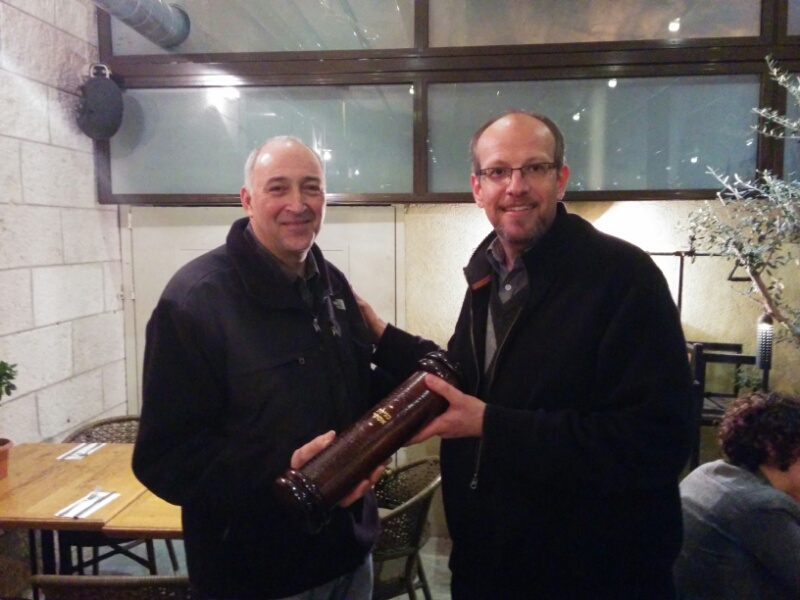
Rabbi Mark Cooper presenting Rabbi Tzvi Graetz with a Megillat Esther for Kiev this week.  The Megillah was a gift from Rabbi Cooper, Rabbi Stephen Stern and Rabbi Benjamin Adler.  
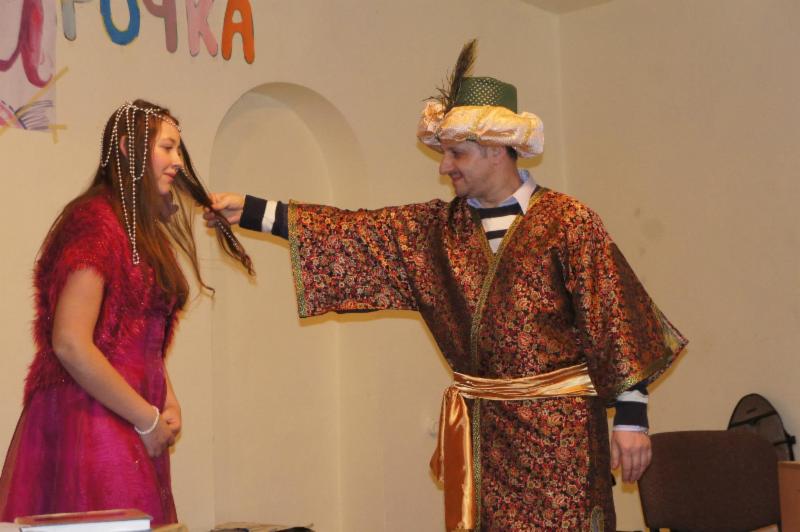
Purim Play Kiev 2013
Lena & Rabbi Reuven Stamov Purim 2013
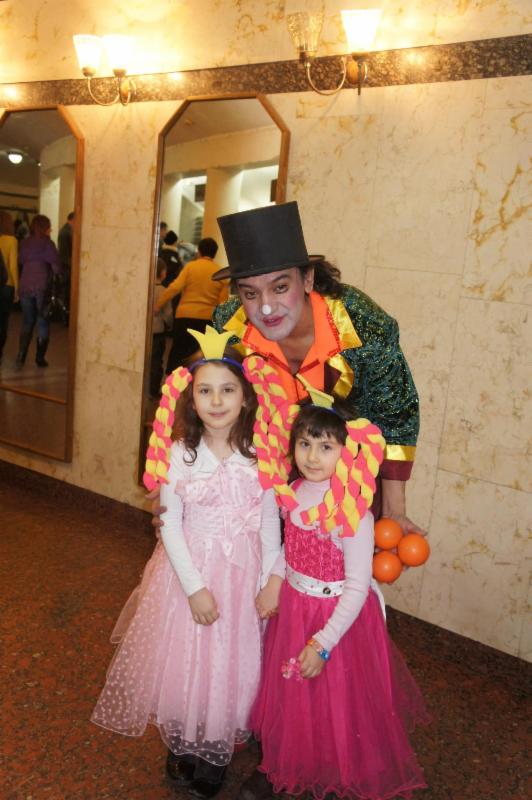
Purim 2013


Copyright © 2013. All Rights Reserved.


Wednesday, January 22, 2014

NJ Jewish Standard: "Conservative youth seek campus revival"

NJ Jewish Standard: "Conservative youth seek campus revival"

Cranford grad student leads push to restore college outreach effort

Douglas Kandl of Cranford, a founder of Masorti on Campus, said the Shabbaton in February will be + enlarge image

Douglas Kandl of Cranford, a founder of Masorti on Campus, said the Shabbaton in February will be "about how to bring Conservative Judaism to your campus."

+ more images

A February Shabbaton, whose aim is to reinvigorate Conservative outreach on campus, is modeled on the annual Koach Kallah, above, now on hiatus along with the organization.

If you go

 What: Masorti on Campus Shabbaton

Where: Jewish Theological Seminary, Manhattan

When: Friday-Sunday, Feb. 21-23

Fee: $90 (includes all meals and programs); students are urged to contact their campus Hillel and other sources for further support.

Registration: masorticampus.org

ADVERTISEMENTS

Visit the NJJN Community pages for the Events Calendar, Synagogue listings, Obituaries, LifeCycle events and more!

by Joanne Palmer
Jewish Standard

January 22, 2014

http://www.njjewishnews.com/article/20884/conservative-youth-seek-campus-revival#.UuARNBDTmM8

Last year, the United Synagogue of Conservative Judaism, which represents the Conservative movement's affiliated congregations, discontinued Koach, the movement's main outreach program to college students.

The move disappointed many in the movement, who noted that according to USCJ's own strategic plan, adopted in 2011, "a continuing presence on campus for Conservative Judaism is vital to maintain the bridge between our high school students and the young adult post-college generation."

Some alumni of Koach are now trying to restore that bridge and are putting together a new organization, Masorti on Campus. The result of a meeting between students and representatives of various Conservative groups, the fledgling organization is offering a Shabbaton, based on the signature Koach Kallah — an annual gathering of students that featured workshops, community service, text study, networking, and Shabbat observance. They hope it will be the seed of a new Conservative movement on campus. (Masorti is the name the Conservative movement uses outside North America.)

The event, to be held Feb. 21-23 at the Jewish Theological Seminary, will include Arnold Eisen, the chancellor of the movement's flagship seminary, plus Torah study and practical advice on growing Conservative Judaism on campus.

Douglas Kandl of Cranford, who recently graduated from Pace University and is about to start a graduate program there, is a founder of Masorti on Campus.

The Shabbaton is the result of a meeting Kandl and other students had with representatives of Conservative movement groups, including JTS, the Los Angeles-based Ziegler School of Rabbinical Studies, Women's League for Conservative Judaism, the Federation of Jewish Men's Clubs, the National Ramah Commission, the Seminario Rabinico Latinoamericano in Argentina, the Conservative Yeshiva in Jerusalem, and two organizations representing the movement outside North America, Marom and Masorti Olami.

"Some of them" — particularly Women's League — "are giving us money, and some are giving us advertising," Kandl said.

The goal is to draw 80 students; after two weeks, 25 had registered, which puts it firmly on track, he said.

"I was really involved with Koach in its last year," Kandl said. "We tried to save it. We were out at the Salute to Israel Parade [in New York City] in 2012, getting signatures; we got about 1,000 altogether." Kandl also helped raise about $100,000, which, when matched by USCJ, renewed Koach for a year until the organization decided to put the program on "hiatus."

"What happened next was that a lot of students reached out to me, saying that they wanted to do a Shabbaton on campus, something like the Koach Kallah, so we decided that it would be our starting point," Kandl continued.

"We also hope to run an Onward Israel trip through the Jewish Agency, and we hope that we will have a program to Israel that will combine an internship and Jewish studies in the summer of 2015."

The Shabbaton will be modeled on the Koach Kallah, but there will be significant differences. "Thekallah was more about Jewish learning," Kandl said. "We will have Torah lishma sessions, but it will be more about how to bring Conservative Judaism to your campus." The Shabbaton will feature PresenTense, an organization that works with Jewish startups, and will be coordinated by Megan Goldman, a rabbinical student who led a Shabbaton with similar ideas last year, Kandl said.

Galvanizing students

Marc Gary, executive vice chancellor and chief operating officer at JTS, represented the seminary at the discussions that gave birth to the Shabbaton. He said that the seminary, like most of the rest of the movement, is working to keep college students connected.

"It is a mistake to infer from the decision of one organization to discontinue a particular college program that there is a lack of commitment among the leaders of Conservative Judaism to our college students," he wrote in an e-mail.

In a later phone conversation, Gary cited as examples of new initiatives the Nishma program, begun last summer, which provided 15 students with intensive Torah study at JTS. "We will have maybe 20 students this year, maybe more," he said.

He also talked about Reshet Ramah, a new program aimed at graduates of the highly successful network of summer sleep-away and day camps that span the country. "A significant number of Ramah staff already are on college campuses," he said. "And we have had some alumni events where we partner with Reshet Ramah here, and it attracts college and graduate students. It is a strong recognition on the part of Ramah and JTS that we already have thousands of present and former campers and staff on college campuses already."

And, of course, there is the Masorti on Campus Shabbaton.

"One of the great strengths is that it is a student-led organization, without a top-down structure," Gary said. The program's goal is to train leaders, who "will go back to their campuses and galvanize students there. It is a different concept, that students will be most effective in galvanizing their own communities."

Eric Leiderman of Englewood, a senior at the University of Hartford in Connecticut, is Masorti on Campus's director of institutional advancement.

"There are a significant number of students across North America who consider themselves to be committed Conservative Jews, or who identity with the movement as closest to the way they interact with Judaism," he said. Those students "find significance in following Halacha and have egalitarian values," he said.

"We are trying to fill the void that was left when Koach was shut down," he said.

"I think there needs to be more on campus for progressive Jews in general, not just for Conservative Jews," said Kandl, who grew up in USY, the Conservative movement's youth group, and was active in Jewish life on campus, including Hillel. "The URJ" — the Union for Reform Judaism — "doesn't have a college program right now. The market is only Chabad, Aish, and the Orthodox Union.

"We want to fill that gap."

-------
Rabbi Menachem Creditor
▶menachemcreditor.org ▶netivotshalom.org

Wednesday, January 15, 2014

Rabbi Gerald Zelizer in the New York Jewish Week: "Conservative Movement’s Impact On The Left And Right"

Conservative Movement's Impact On The Left And Right
Tue, 01/14/2014
Rabbi Gerald Zelizer

First the Pew survey, then the eulogies for Conservative Judaism. Compared with ten years ago, the absolute number of Conservative Jews has declined precipitously. It has the lowest retention rate among the three major denominations. Worst of all, only 11 percent of respondents under the ages of 30 define themselves as Conservative. But hold on. 

It is true that the Conservative Movement is not doing so well.

It is also true that Conservative Judaism is doing quite well.            

Conservative Judaism, as contrasted with the Conservative Movement, is a particular approach to Judaism. It stands for "tradition and change," or as someone called it "authenticity and relevancy." It also means analyzing Judaism's sacred texts, like the Hebrew Bible, historically and scientifically. Conservative Judaism understands those texts as shaped by both indigenous "Torah only" authors and themes, while also impacted by the forces of societies and religions that surrounded ancient Israel. Gauging by those two core definitions, Conservative Judaism is flourishing, even if some of its institutions are not. How so? Because the two lenses of tradition and change, and the historical study of Judaism's sources, increasingly shape the vision of movements both to the left and right of my own. Indeed, these two core principles of Conservative Judaism have permeated both Reform and Modern Orthodoxy.

The shift of Reform towards tradition has been widely observed. The new Reform Prayer Book is more traditional, Shabbat and kashrut are given a higher priority in terms of observance, and it is commonplace for worshippers wear a kippah and tallit. In addition, strong support of Israel and the Hebrew language are now central to the Reform movement.

All these late 20th century tilts to tradition followed the pattern of Conservative Judaism and Solomon Schechter, but a century later.

Modern Orthodoxy, however, has moved in the opposite direction. In significant ways, it too has liberalized towards Conservative's "change."

Prenuptial agreements, encouraged by the Rabbinical Council of America, have since the 1990s offset the unilateral power given to men to initiate or refuse a get, or religious divorce. "Prenups" provide that even when the couple ceases to share a residence, the husband's obligation under Jewish law to support the wife becomes legally enforceable as long as they are married. This is a strong incentive for the husband to acquiesce and initiate the get. The Orthodox prenup follows by decades the so-called Lieberman Clause of the Conservative ketubah, which already in the 1950s required a recalcitrant husband to have the Rabbinical Assembly bet din adjudicate his arranging a get after a civil divorce.

Bat Mitzvah is becoming a norm in many Modern Orthodox synagogues, emulating the Conservative ritual begun in the 1920s. To be sure, Orthodox synagogues do not allow the girl to have an aliyah and read the Torah as in many Conservative synagogues. But depending on the synagogue, girls celebrate this rite of passage in creative ways, like chanting a non-Torah text before the congregation; delivering a d'var Torah; and/or leading services in a separate women's only group.

And note the increase in women yeshivot and hakafot on Simchat Torah, even in Israel!

Regarding the scientific and historical approach to sacred texts, the Maggid imprint of the respected Koren Press offers "contemporary approaches to traditional texts." Its salesperson at a recent United Synagogue convention pitched the books as "incorporating modern Biblical scholarship" to the traditional texts.

My roots and allegiance to Conservative Judaism run deep and wide. My father, a graduate of JTS, served a Conservative Congregation in Columbus, Ohio for over 40 years. My own service here in Metuchen NJ is approaching 45 years. I attended Camp Ramah, served as president of USY in my youth, and later was president of the Rabbinical Assembly.

I am saddened by the struggles of our movement and am confident its leaders will find the means of revival. If not, though, I am sanguine that Conservative Judaism lives because much of its take on tradition and change has leaked into Reform and Orthodoxy. According to Brandeis University professor Jonathan Sarna, "Solomon Schechter never wanted to create a separate movement." It was the Conservative ideology he hoped would embrace much of American Jewry. It increasingly has.

Rabbi Gerald Zelizer is spiritual leader of Congregation Neve Shalom in Metuchen, NJ.

-------
Rabbi Menachem Creditor
▶menachemcreditor.org ▶netivotshalom.org

Sunday, January 12, 2014

Rabbi Reuven Hammer -- Tu Bishvat: "Responsibility for the Land"

Tu Bishvat: "Responsibility for the Land"

Rabbi Reuven Hammer


In the early days of pioneering Zionism,  secular settlers in Kibbutzim and elsewhere made attempts to recast religious holidays into new molds that emphasized the return of Jews to the soil. We were no longer an urban people, but a people that had returned to the land. Thus they emphasized the agricultural aspects of these days, singling out nature for praise and ignoring God and other religious aspects.


The most well known of these attempts was the plethora of Passover haggadot that spoke about Pesah solely as "the holiday of spring" and never mentioned the name of God or the idea of redemption. Shavuot, building on the idea of "first fruits," was especially important and was used to emphasize the harvests. Even children born during the year were paraded as "first fruits" and still are in some places. Obviously the aspect to the giving of the Torah was put aside. Few if any of these attempts have truly succeeded in remaking the holidays as far as the general Jewish public is concerned. The one exception is Tu Bishvat which is almost upon us. It was totally reinvented. From being the "new year of the trees," it became the holiday of tree planting, something never envisioned in the traditional sources. The success of this reinvention may be attributed to many forces, the most important being that it had the Jewish National Fund and all its resources behind it. In addition it filled a real need – the reforestation of a denuded land.


Originally Tu Bishvat was merely a date on the calendar used to calculate the new year of fruit trees. It is one of four dates mentioned in the Mishnah, Rosh Hashanah 1:1 as new years: the first of Nisan, the new year for the reign of kings and the festivals, the first of Elul, the new year for counting tithes on animals, the first of Tishre, the new year for years, and the first of Shvat, the new year for the tithing of fruit trees. This was the ruling of the school of Shammai. The school of Hillel, however, said that it was the fifteenth of Shvat, and that became the law.


Since all the other dates are the first of the month, the time of the new moon, it is curious that Bet Hillel insisted that this one be on the 15th, the full moon. Prof. Louis Ginzberg, the great Talmudist who taught at the Jewish  Theological Seminary in New York, once gave a lecture at the Hebrew Univeristy in which he explained this anomaly. According to Ginzberg it has an economic and social reason, based upon the fact that the Shammaites represented the richest landowners and the Hillelites represented the poorer classes. The trees in the land owned by the rich were in the lower and more fertile areas of the country and blossomed early. The trees belonging to the poor in the higher, rockier, areas did not blossom until the middle of the month. Ginzberg also explained many other differences between the two schools on the basis of socio-economic differences between them. Therefore the anomaly of a "new year" which begins on the 15th of the month.


Concerning the remaking of Tu Bishvat, before the Zionists, Kabbalists in the 16th century had instituted many other customs for that day, including the eating of fruits and even a Seder for Tu Bishvat, emphasizing the texts in our tradition that speak about trees. Thus inserting the idea of planting trees was a relatively easy step to take.

Tu Bishvat now serves to call our attention not only to trees, but to nature in general. By celebrating the fruits of this land, it reminds us of the blessing we have in dwelling in a rich and fertile place, but it also calls upon us to do whatever has to be done to preserve the earth, the soil and the fragile environment in which we live.


The secular Zionists were right about the fact that having a land of our own, we should be more and more aware of the blessing of the land and of the need to preserve it. We may not all be farmers and tillers of the soil, but we are all benefactors of the good earth that is ours and therefore responsible to preserve it. Secularists may think that this has nothing to do with religion, but believers see the land as a gift from God the Creator and view themselves as partners with the Creator in the work of creation. God placed Adam in the garden "to till it and to preserve it" (Genesis 2:15). Similarly, God did not give us this world in order for us to destroy it, but so that we could preserve it and even improve it. That is what To Bishvat should mean to us today.